Why Pull-Ups Feel Impossible Even When You're Strong Everywhere Else
Quick Answer: Pull-ups feel impossible even for otherwise-strong women because they require pulling your full bodyweight with muscles (lats and grip) that most training programs barely target directly. The fix is grip-specific and lat-specific accessory work, not just ‘getting stronger overall.’
You can hold a plank for two minutes and squat your bodyweight, but hang from a bar and you can’t budge an inch. That gap feels confusing — but it’s actually completely predictable once you understand what pull-ups specifically demand.

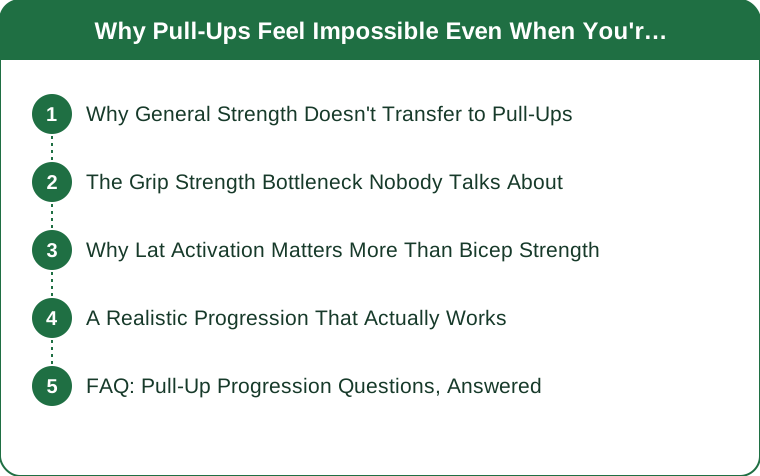
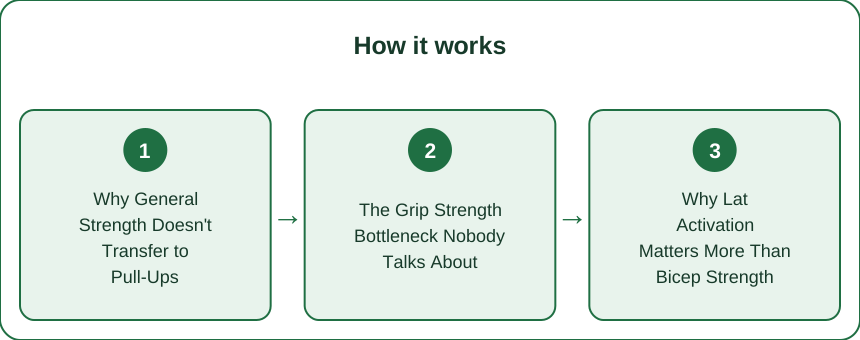
Why General Strength Doesn’t Transfer to Pull-Ups
Pull-ups require moving 100% of your bodyweight through a vertical pulling pattern, which is fundamentally different from squats (leg-dominant, ground-supported) or planks (isometric, no movement). Most fitness routines are heavy on pushing and leg work but genuinely light on vertical pulling, which means the specific muscles a pull-up needs — lats, rear delts, and grip — often go undertrained even in women who train consistently.
This is why someone can be objectively strong by most measures and still struggle with their very first pull-up: the exercise tests a strength pattern their program simply hasn’t been building.
The Grip Strength Bottleneck Nobody Talks About
Grip strength is one of the most common limiting factors in pull-up progress, and it’s rarely trained directly. If your forearms burn out and your hands start slipping before your back even feels fatigued, that’s grip failing before your pulling muscles get the chance to.
Dead hangs — simply hanging from the bar with straight arms — build grip and shoulder stability without needing any pulling strength at all, making them one of the most efficient entry points. Building up to a 45-60 second dead hang is a strong predictor of pull-up readiness.

Why Lat Activation Matters More Than Bicep Strength
Many women instinctively try to pull with their arms and shoulders, which fatigues quickly since biceps are small muscles. The lats — the large back muscles running from your armpits to your lower back — are the primary movers in a well-executed pull-up, and most people have never consciously activated them before.
A simple cue that helps: before pulling, imagine trying to bend the bar or bring your elbows down and back rather than up. Practicing this lat-engagement pattern with resistance bands or lat pulldowns builds the neural connection your body needs before it can express that strength in a full pull-up.
A Realistic Progression That Actually Works
Weeks 1-3: Dead hangs and scapular pulls. Build to a 45-second hang and practice pulling your shoulder blades down without bending the elbows.
Weeks 4-6: Banded pull-ups and negatives. Use a resistance band for assistance, or jump to the top position and lower down slowly (5+ seconds) to build eccentric strength.
Weeks 7-10: Reduce band assistance progressively. Move to thinner bands or fewer assisted reps as negatives get controlled and smooth.
Weeks 10+: First unassisted rep. Most consistent trainees following this progression see their first true pull-up in 8-12 weeks, though timelines vary with starting grip and back strength.
FAQ: Pull-Up Progression Questions, Answered
How long should a beginner realistically expect to work toward one pull-up?
Most women following a structured grip-and-lat progression see their first unassisted pull-up within 8-12 weeks, though starting strength and consistency both shift that timeline.
Are resistance band assisted pull-ups actually effective, or a crutch?
They’re genuinely effective — bands let you practice the full range of motion under real load while gradually reducing assistance, which builds the exact strength pattern an unassisted pull-up needs.
Is grip strength trainable on its own, separate from pull-up practice?
Yes — dead hangs, farmer’s carries, and simply hanging from a bar for time all build grip strength independently and transfer directly to pull-up performance.
TL;DR:
- Pull-ups test a specific vertical-pulling pattern most training programs don’t build, which explains the strength gap
- Grip strength is a common hidden bottleneck — dead hangs fix this directly
- Consciously activating your lats (not just pulling with arms) makes a bigger difference than raw strength
- A structured 8-12 week progression (hangs → negatives → banded reps → unassisted) gets most women to their first rep
The gap between ‘strong everywhere else’ and ‘can’t do a pull-up’ isn’t a contradiction — it’s just an untrained pattern, and it closes faster than most people expect once you train it directly.
Keep Reading
This article is for general informational and styling purposes only. Fit, sizing, and product availability may vary.