Pull-Up Progression for Beginners: From Zero to Your First Rep
Quick Answer: Getting your first pull-up is about building strength in the right order, not brute force — start with dead hangs and scapular pulls, add band-assisted reps and slow negatives, and reduce the assistance gradually as you get stronger. Most beginners earn their first unassisted rep within a few weeks to a few months of consistent, regular practice.
You jump up to the bar, pull as hard as you can, and… nothing. Your feet stay glued to the floor and your arms just shake. If that’s you, good news: it’s not a strength failure, it’s a missing-steps problem, and there’s a proven fix.

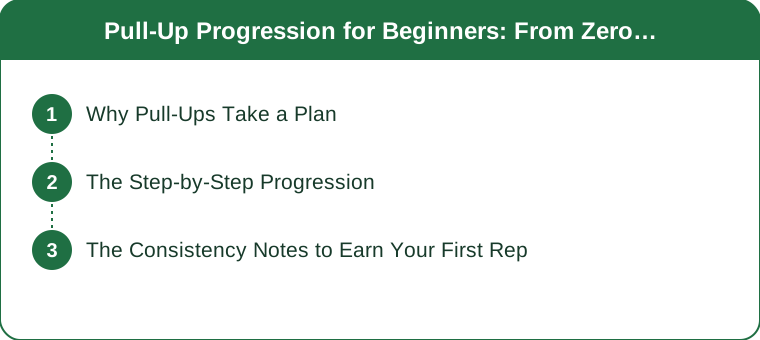
Why Can’t You Just “Try Harder” to Get a Pull-Up?
Pulling your entire body weight up to a bar takes real, significant back and arm strength — strength most people haven’t built yet, because most workouts simply don’t ask for it. That’s exactly why the pull-up feels so much harder than it looks on video.
The real issue is that a pull-up is basically all-or-nothing without a progression plan. There’s no partial credit if you can’t complete the full range of motion, which is discouraging, but also misleading — you’re actually building real strength every time you try, even when zero reps show up on the counter.
A few things worth knowing before you start:
- Grip, back, and core all have to work together, not just your arms
- The order you train them in matters more than how hard you try in any single session
- A first pull-up commonly takes weeks to months of consistent work, not days
Reframe it this way: a pull-up isn’t a test you either pass or fail. It’s a milestone you earn through a staged plan, the same way you’d train for a 5K instead of just sprinting until your legs give out.

What’s the Actual Step-by-Step Progression to Your First Rep?
Here’s the order that works, roughly from easiest to hardest:
- Dead hangs. Simply hang from the bar with straight arms. This builds grip and shoulder strength and is where nearly every progression starts.
- Scapular pulls. From a hang, pull your shoulder blades down and together without bending your elbows much. It’s a small movement, but it teaches your body the very first inch of the pulling motion.
- Band-assisted pull-ups. Loop a resistance band around the bar and under your foot or knee — it takes some of your body weight off so you can practice the full range of motion.
- Negatives. Jump or step up to the top position, then lower yourself down as slowly as you can, ideally over 3 to 5 seconds. This builds real strength through the eccentric (lowering) portion of the movement.
- Rows for back strength. Inverted rows or band rows build the same pulling muscles from a more manageable angle.
- Hollow body holds and core work. A tight, engaged core keeps your body from swinging around on the bar, which makes every other step more effective.
- Reduce the assistance over time. Move to lighter bands and do more negatives as you get stronger, week over week.
- Test an unassisted rep periodically. Every couple of weeks, just try one. It’s the only way to know your training is translating to the real thing.
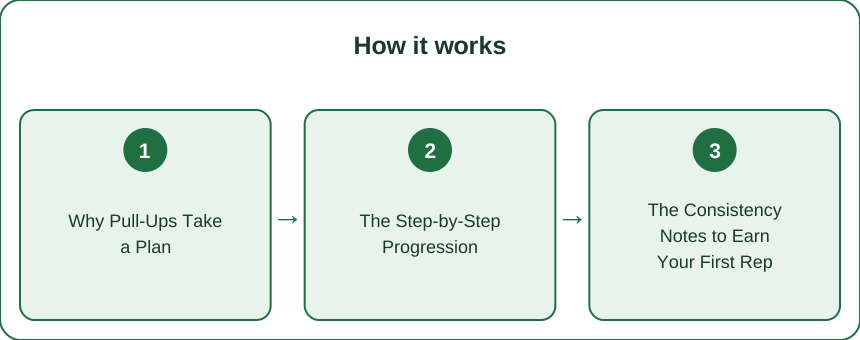
How Often Should You Train, and What Actually Moves the Needle?
Consistency beats intensity here, pretty much every time. A few notes that make the biggest difference:
- Train it regularly — a few sessions per week works better than one heroic, exhausting session
- Progressively reduce assistance and add reps as things start to feel easier
- Rest between sessions so your back and arms actually get to rebuild, not just get more tired
- Prioritize quality over quantity — a handful of good-form assisted reps beats a pile of sloppy ones
- Train the whole system, not just your arms — grip, back, and core all need attention
- Be patient. Steady work over several weeks is what earns the rep, not any single “hero” workout
When that first unassisted rep finally happens, let yourself actually celebrate it. It’s a genuine strength milestone, and plenty of very fit people never quite get there because they skip the staged approach.
A Quick Note on Safety and Knowing Your Limits
Pull-up training puts real stress on your shoulders, elbows, and wrists, so it’s worth balancing your pulling work with some pushing exercises too, to keep things even. If you feel sharp pain (not just muscle fatigue) in your shoulder or elbow, stop and rest rather than pushing through it.
If pain persists beyond a few days, or you have an existing shoulder or joint issue, it’s worth checking in with a physical therapist or qualified trainer before continuing — they can catch form issues a mirror won’t show you.
5 Mistakes Beginners Make on the Pull-Up Progression
- Skipping straight to band-assisted reps without building a solid dead hang and scapular pull foundation first.
- Rushing to remove the band too early, before the movement pattern is actually solid.
- Ignoring negatives, which are one of the fastest ways to build real strength for this exact movement.
- Training every single day without rest, which usually stalls progress instead of speeding it up.
- Comparing timelines to other people. Some people get their first rep in three weeks, others in three months — both are completely normal.
Frequently Asked Questions
How long does it usually take to get your first pull-up?
Most beginners following a consistent progression see their first unassisted rep somewhere between a few weeks and a few months. The exact timeline depends heavily on your starting strength, body weight, and how consistently you train each week.
What’s the single best exercise for building toward a pull-up?
Negatives (slowly lowering yourself from the top position) and band-assisted pull-ups are generally considered the most effective, since they let you practice the full range of motion under real load. Combining both with regular dead hangs tends to produce the fastest progress.
Do you need any equipment to start training for a pull-up?
A pull-up bar and a set of resistance bands cover almost everything you need for this progression. Dead hangs, scapular pulls, and negatives can all be done with just a bar, which makes this one of the more accessible strength goals to train for at home.
TL;DR:
- A pull-up takes real back and arm strength, so it’s normal to start at zero reps
- Progression order: dead hangs, scapular pulls, band-assisted pull-ups, negatives, rows, and core work
- Reduce band assistance gradually and test an unassisted rep every couple of weeks
- Train a few times a week, rest between sessions, and prioritize good form over quantity
- Watch for sharp joint pain and see a professional if it doesn’t resolve within a few days
- Most beginners earn their first rep within weeks to a few months of consistent training
Keep Reading
This article is for general informational and styling purposes only. Fit, sizing, and product availability may vary.