Calisthenics Without a Pull-Up Bar: What You Can Still Train at Full Effort
Quick Answer: No pull-up bar doesn’t mean no back training. Table/desk rows, towel or resistance-band isometric pulls, braced doorway pulls, and bodyweight holds like reverse planks and supermans all train the same back and grip strength without anything to hang from. A doorframe bar or park equipment is a cheap upgrade later, not a requirement now.
You start a home calisthenics routine, hit the section on pull-ups, and realize you don’t have anything to hang from. It feels like a dealbreaker — but it’s a much narrower problem than it looks like at first, and it doesn’t have to stall the rest of your routine.

Why Does a Missing Pull-Up Bar Feel Like Such a Big Deal?
Here’s the thing worth noticing first: most of calisthenics doesn’t need a bar at all. Push-ups, squats, lunges, and most core work already require zero equipment. The bar gap is much narrower than it first appears.
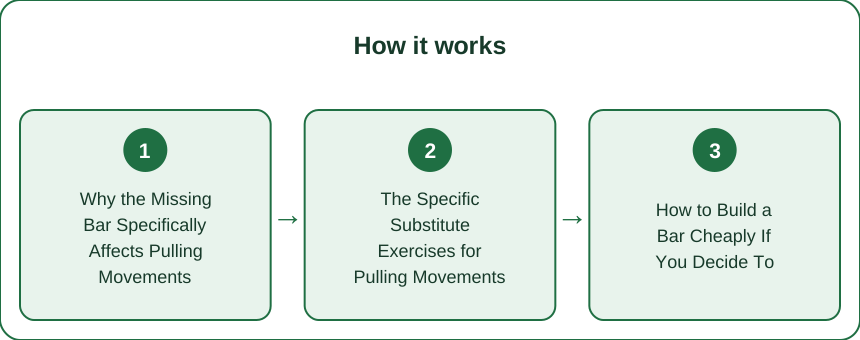
Pulling movements are the one real exception. True pull-ups and hang-based work uniquely require something to hang your bodyweight from — unlike almost every other bodyweight category, which needs nothing but floor space. That makes pulling the one movement category with a genuine hardware dependency, and it’s specifically your back and grip strength that end up underdeveloped in a bar-free routine unless you deliberately substitute for it.
The trap a lot of people fall into: one missing piece of equipment leads them to abandon the entire routine, instead of just working around the one gap it actually creates. That’s a mistake — the substitutes below are well-established, not improvised workarounds, and plenty of people train pulling strength effectively without ever touching a bar.

What Exercises Actually Replace Pull-Ups Without a Bar?
Five substitutes cover the pulling gap at real training effort:
- Table or sturdy desk rows. Lie underneath a sturdy table and pull your chest toward the underside — this mimics a horizontal row pattern and is the most direct pull-up-adjacent substitute you can do with furniture you already own. Test the table’s stability with light weight first.
- Towel or band-assisted isometric pulls. Loop a towel around a secure anchor point for isometric or dynamic pulling tension. It creates real resistance without needing a bar at all.
- Braced doorway pulls. A sturdy towel over a solid door top, carefully braced, gives you a controlled pulling motion. This is a classic improvised substitute — just make sure the door and hinges can actually take the load before committing your full bodyweight.
- Resistance band pulldowns and rows. Anchor a band overhead or at a fixed point to simulate pulldown and rowing motions. Bands cover the pulling gap well and pack down small enough to travel with.
- Reverse plank and superman holds. Bodyweight-only back-strengthening holds that don’t require pulling against anything external at all — pure back strength, zero hanging required.
Together, this set — table rows, towel or band isometric pulls, careful doorway pulls, band pulldowns and rows, and bodyweight back holds — is a genuinely complete pulling-movement substitute routine. No bar required.
Should You Eventually Get a Pull-Up Bar Anyway?
Not required, but if you want one, several options are cheap:
- A doorframe pull-up bar. Simple pressure-mounted bars are the most common cheap entry point and need no drilling. This is usually the first upgrade people make.
- Outdoor playground or park equipment. Check nearby parks — genuinely free, and often closer than you’d expect.
- A sturdy tree branch. In the right outdoor setting, a strong, appropriately positioned branch works as a free substitute.
- Check weight limits and mounting safety first. Doorframe bar installation quality varies a lot — verify the weight rating and mounting security before trusting it with your full bodyweight.
- A portable suspension trainer. Strap-based systems offer another low-cost, no-permanent-installation option for pulling work, and they travel well.
What Nobody Tells You About Training Without a Bar
Most people assume bodyweight rows and towel pulls are a “lesser” substitute you settle for until you can afford real equipment. In practice, table rows and doorway pulls at high rep volume build real, functional pulling strength — plenty of people train an effective back routine for months on furniture and towels alone before ever adding a bar. The bar makes true pull-ups possible eventually, but it’s an upgrade, not a prerequisite for making progress now.
Mini FAQ
Can I really build back strength without a pull-up bar?
Yes. Table/desk rows, towel or band isometric pulls, doorway pulls, and bodyweight holds like reverse planks and supermans all train the same back and grip strength as bar work.
What’s the single best pull-up substitute if I only pick one?
Table or sturdy desk rows — they most directly mimic the horizontal pulling pattern and require only furniture you likely already have.
Is a doorframe pull-up bar safe to use?
Generally yes, but check the weight rating and mounting security before trusting it with your full bodyweight — installation quality varies between models and doorframes.
TL;DR:
- Most of calisthenics (push, legs, core) needs zero equipment — pulling is the one real bar-dependent category
- Table rows, towel/band isometric pulls, doorway pulls, band pulldowns, and reverse plank/superman holds all substitute effectively
- None of these substitutes are “lesser” — they build real pulling and back strength at full effort
- A doorframe bar, park equipment, a tree branch, or a suspension trainer are all cheap upgrades if you want one later
- A missing bar shouldn’t stall your whole routine — it only affects one movement category, and that category has real options
Keep Reading
This article is for general informational and styling purposes only. Fit, sizing, and product availability may vary.